
"climate for coffee"
20000 article(s) found
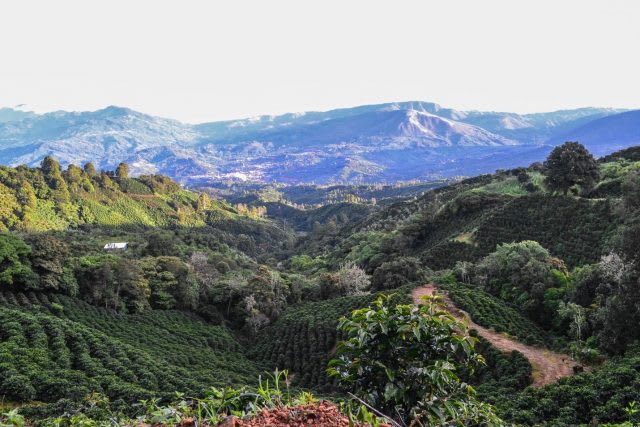
What are the local conditions? What is the effect of local conditions on the flavor of coffee?
Professional coffee knowledge exchange more coffee bean information please follow the coffee workshop (Wechat official account cafe_style) What Is Terroir and How Does It Affect Your Coffee We often hear the word "local conditions" when talking about coffee, but what exactly does "local" mean? Does it have anything to do with the flavor of coffee? Why do we need to care about the local environment? Author mining

El Salvador coffee producing area with subtropical forest climate
Savanna climate. Plain area belongs to tropical rain forest climate, mountain area belongs to subtropical forest climate. The annual average temperature is 25-28℃, the annual precipitation in mountainous areas is more than 1,800 mm, and that in coastal areas is about 1000 mm. May-October is the rainy season. Don't underestimate El Salvador's coffee production. In its heyday, it was the world's fourth-largest coffee producer, but decades of civil war nearly brought coffee down.

What are the local conditions? What is the effect of local conditions on the flavor of coffee?
Professional coffee knowledge exchange more coffee bean information please follow the coffee workshop (Wechat official account cafe_style) What Is Terroir and How Does It Affect Your Coffee We often hear the word "local conditions" when talking about coffee, but what exactly does "local" mean? Does it have anything to do with the flavor of coffee? Why do we need to care about the local environment? Author mining

An introduction to the geography and climate of coffee-producing areas in Kenya
Kenya's climatic and geographical conditions provide unique conditions for the growth of high-quality coffee beans, which are located in eastern Africa, the equator runs through the middle, and the East African Rift Valley runs through the north and south. It is bordered by Somalia to the east, Tanzania to the south, Uganda to the west, Ethiopia and Sudan to the north, and the Indian Ocean to the southeast. The coastline is 536 km long. There are many plateaus in the territory, with an average elevation of 1500 meters.

An introduction to the climate and geography of coffee beans in Kenya
Following caf é (Wechat official account vdailycom) found that Beautiful Cafe opened its own shop profile: SASINI Manor is located in KIAMBU area around Mount Mountain Kenya, about 1800 meters above sea level, where the scenery is beautiful, the climate is pleasant, the light is sufficient, the soil condition is superior, it belongs to fertile acid red soil, the soil is loose, the soil layer is deep, and the drainage is good.

Jamaica Blue Mountain Coffee Geographic location, Regional Climate
The unique flavor of Blue Mountain Coffee is related to the unique geographical location and climatic conditions of Blue Mountain. Blue Mountain is located in the coffee belt between 25 degrees north latitude and 25 degrees south latitude, with fertile new volcanic soil, fresh air, no pollution, rainy all the year round and great temperature difference between day and night. Most importantly, clouds cover the top of the mountain every afternoon, not only as a natural shade for coffee trees, but also for coffee trees.

The relationship between coffee bean quality and altitude, the relationship between air temperature, and the harm of climate change to coffee trees.
Professional coffee knowledge exchange more coffee bean information please follow the coffee workshop (Wechat official account cafe_style) altitude: a symbol of coffee quality? Higher altitude is often associated with better sweetness and more complex coffee flavor; to be exact, there is a correlation between the two, but not causality. To a large extent, the factors that affect the quality of coffee

With a humid climate, Rain Water's abundant Cuban crystal coffee
With fertile land, humid climate and abundant Rain Water, Cuba can be called a natural treasure land for coffee cultivation. The suitable natural conditions provide a favorable natural environment for the growth of coffee trees. Coffee is well cultivated and developed here, and the best coffee growing area in Cuba is located in the Central Mountains. Because in addition to growing coffee in this area, there are also precious minerals such as quartz and crystals.

A brief introduction to the climatic characteristics of coffee in El Salvador
Climate characteristics, savanna climate. The plain area belongs to the tropical rain forest climate and the mountain area belongs to the subtropical forest climate. The average annual temperature is 25-28 ℃. The annual precipitation is more than 1800 mm in mountain areas and about 1000 mm in coastal areas. The rainy season is from May to October. Don't underestimate El Salvador's coffee production. In its heyday, it was the world's fourth largest coffee producer, but after decades of civil war, it was almost

Introduction of Rwandan Coffee with Tropical Climate characteristics Lute Xilo producing area in the Western Province
The taste of Rwandan coffee is described as a grassy aroma with tropical climates. in addition to the sweetness of fruit, this coffee also gives people a feeling of freshness, clarity, and freshness. Bourbon coffee grown in Rwanda is amazing for its sweet fruit, full-bodied, unrestrained and lingering aftertaste. This kind of coffee is delicious.

Hierarchical and full Columbia exquisite boutique coffee bean planting situation, geographical location, climate sea
The suitable climate in Colombia provides a real natural pasture for coffee. Coffee trees in Colombia are mainly cultivated in the Andes, on steep slopes about 1300 meters above sea level, where the annual temperature is about 18 degrees Celsius, annual rainfall is 2000 to 3000 millimeters, latitude 1-11 15 north, longitude 72-78 west, and the specific range of elevation can exceed 2.000 meters. By

High-balanced Columbia exquisite boutique coffee bean cultivation geographical location, climate, altitude is simple.
The annual temperature there is about 18 degrees Celsius, the annual rainfall is 2000 to 3000 mm, latitude 1-11 15 north, longitude 72-78 west, the specific range can exceed 2.000 meters above sea level. By a special combination of factors, the latitude, altitude, soil, plant origin of species and varieties of coffee in the coffee growing areas of Colombia, the climate and tropics of the coffee growing areas

The Colombian coffee producing area with a pleasant climate and spring-like climate all year round introduces Coca Cauca.
Columbia Coffee is a representative and excellent variety of Arabica coffee. It is a traditional deep-roasted coffee with a strong and memorable flavor. Colombia, located in the northwest of South America, is a beautiful country with a long history. Indians have lived on this land since ancient times. 1531 AD

The producing areas of Guatemala coffee beans distribute the climatic environment of Guatemala
Professional coffee knowledge exchange more coffee bean information Please pay attention to the coffee workshop (Wechat official account cafe_style) after the impact of the Kuroshio movement, people gradually began to acquire professional knowledge and technology related to the coffee industry. In addition to the annual large-scale coffee-related exhibitions, barista competitions and the ever-changing baking equipment of various countries, our loyalty and love for coffee is no longer
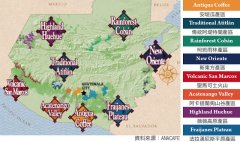
The reason for the variety of coffee flavor in Guatemala: the micro-climate combination forms the personality and characteristics of coffee flavor.
Communication of professional baristas Please pay attention to Coffee Workshop (Wechat official account cafe_style) after the impact of the Kuroshio movement, people gradually began to possess professional knowledge and technology related to the coffee industry. In addition to the annual large-scale coffee-related exhibitions, barista competitions and the rapid development of baking equipment, our loyalty and love for coffee is no longer just to meet the status quo.

Abnormal climate in Costa Rica affects coffee production
According to the latest report released by the Costa Rican Coffee Authority, coffee production in the country has plummeted by nearly 30 per cent in the past decade, including a 15 per cent drop in 2011 compared with the same period last year. The report also pointed out that although the increase in production costs, price fluctuations in the international market and domestic policy changes have led to a decline in coffee production year by year, the main reason is the intensification of climate change. Costa Rica is the main coffee in the world

Guatemala Flower God Coffee Planting Situation Location Climate Elevation Profile
Coffee was introduced to Guatemala in 1750 by Father Jesuit, and German colonists developed the coffee industry in the late 19th century. Today, most of the coffee industry is produced in the south of the country. Guatemala has seven major coffee producing areas, each producing area produced by the coffee flavor is different, but in summary, Guatemala coffee are

Soft and silky Colombia Nalinglong Fine Coffee Bean Planting Location Climate Elevation
Colombia coffee is the first coffee produced in Medellin, both in terms of yield and texture. It is characterized by full coffee beans, rich nutrition, moderate acidity, good balance, rich aroma and soft and smooth taste. Apart from Medellin, Armenia and Manizales, the capital cities of two neighboring provinces in the south, are also famous coffee producing areas.

The rich smell of Columbia exquisite boutique coffee beans planting geographical location, climate, altitude is simple
The annual temperature there is about 18 degrees Celsius, the annual rainfall is 2000 to 3000 mm, latitude 1-11 15 north, longitude 72-78 west, the specific range can exceed 2.000 meters above sea level. By a special combination of factors, the latitude, altitude, soil, plant origin of species and varieties of coffee in the coffee growing areas of Colombia, the climate and tropics of the coffee growing areas

Will the weather affect the flavor of the coffee during processing? What is the process of coffee processing?
As discussions about climate change become mainstream in the media in 2019, it is well known that global warming is no longer a distant future. Rising sea levels and rising temperatures have affected many aspects of human life. Agriculture is one of the most changing areas, and agriculture itself is also an important factor in greenhouse gas emissions. This will have a significant impact on coffee production.